

I Was Very Good at Being Needed
...fifteen years of being indispensable. Then I had to figure out who I was without it.

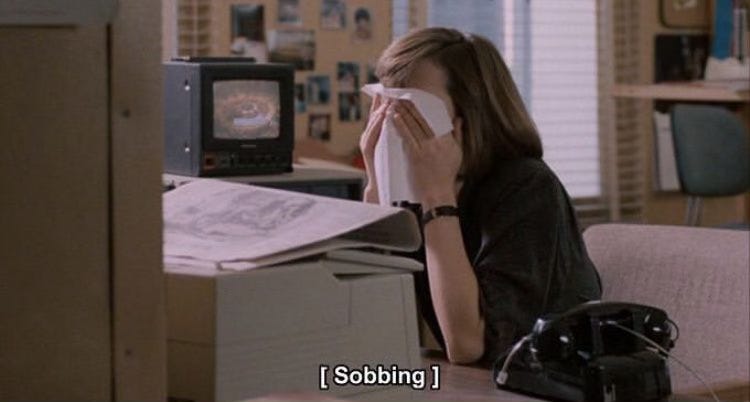
There’s a particular kind of identity crisis that sneaks up on you when you’ve spent your entire life being useful. Not helpful… useful. There’s a difference. Helpful is offering to bring wine to dinner. Useful is knowing how to charm a customs agent when your boss forgets her work visa in another country.
I spent fifteen years being useful. Officially, I was a personal and executive assistant in the entertainment industry. Unofficially, I was a human Swiss Army knife—a 24-hour problem solver, a walking contingency plan, a person whose life existed mostly to keep other people’s lives running smoothly.
I had turned being a people pleaser into a career, but it wasn’t just a job. It was my identity.
And not just at work. My friends, my family—everyone had learned to expect it from me. I was the one who could get you a table at a restaurant that didn’t take reservations, the one who knew how to talk to customer service in just the right way to get a refund, the one who could solve problems no one knew they had yet.
People like people who are useful. Or at least, that’s what I told myself.
Quitting my job was supposed to be the hard part. It wasn’t. The hard part was realizing I’d built my entire existence around being needed. I had trained everyone in my life to see me this way—the helper, the human fix-it button, the person who could bend reality to their needs with the right combination of charm and persistence. They didn’t invent this version of me. I did.
And I wasn’t just good at it—I’d made it a condition of my existence.
So what happens after it all ends? What happens when you throw in the metaphorical towel, and wave the white flag of surrender to those fifteen years?
Well, for starters… you are very, very tired.
And… you have a lot of questions.
When you’ve built your entire identity around being the person who gets things done—when you’ve made yourself indispensable—what happens when you stop?
And, who was I, if I wasn’t the person people needed?
If I had been paying attention, I would have seen it coming. The signs weren’t subtle.
There was the one boss who had me Marie Kondo her press clippings—pausing to thank each glowing review for bringing her joy before deciding, ultimately, that they all did.
There was the shopping problem—so excessive that one boss’s boyfriend’s entire wardrobe had been reduced to a single drawer. According to her, this wasn’t a sign that she had a problem but that I had failed to ‘maximize space.’
Or the time a certain hotel was fully booked, and my boss said, with unnerving calm, “Figure it out,” in a tone that suggested ethics were… optional.
Somewhere along the way, my life had fused with theirs. My time, my schedule, my actual location—all of it dictated by other people’s whims, moods, and PR strategies. But the strange part was how easily that dynamic slid from my work life into my real life.
It wasn’t just about efficiency, it was about existence. If I wasn’t useful, what was I? I didn’t know. And maybe that’s why I was so good at it. Because the moment I stopped being useful, I started feeling invisible.
Because what happens when you confuse being useful with being loved? You spend years contorting yourself into the exact shape of other people’s needs, thinking that if you just solve the next problem, anticipate the next disaster, orchestrate the next perfect outcome, you’ll earn your place. But there’s no finish line, no final ledger where someone tallies up all your good deeds and hands you an identity outside of them. There’s just more need. More demands. More people happy to take whatever you keep giving.
And the thing is… it felt good. Not in a healthy way, but in a way that makes you feel briefly important before everything resets to zero and you do it all over again.
Because when you’re useful, people keep you around. And if they keep you around, maybe that means something. Maybe it means you matter.
It took me a long time to see the trap I’d built for myself. That usefulness wasn’t a personality, it was a transaction. And the second you stop offering a service, you start to wonder what’s left.
The part they don’t tell you is that you can quit the job, but it isn’t so easy to quit the version of yourself that only knows how to be wanted if you’re solving something. The version of you that finally handed back the phone and the badge and the bottomless sense of purpose that came from being urgently needed at all times.
Even now, years later, I still have a Pavlovian response to the sound of a text arriving. My heart rate spikes like I’m being subpoenaed. I don’t even get work texts anymore, half the time it’s my mom sending me photos of her latest DIY project, but my nervous system hasn’t gotten the memo.
The difference is, now I know that I’m the one who taught everyone to see me this way. The helper. The human fix-it button. And I also know that if I want to stop being that person, I have to disappoint people…probably forever.
In the end, that’s all it comes down to—just me, getting comfortable being a little bit useless.
File Under: ‘Things That Look Like Love But Aren’t.’
—The Ash Files—Where life’s unexpected moments get filed away—sometimes neatly, sometimes under “figure it out later.” From writer/creator ASH, expect weekly musings, honest stories, and a reminder that no one has life entirely figured out [least of all me].✨
I don’t know how else to explain it but you’re the only TikTok follow that converted to a Substack follow whose words are just as impactful over a video and via text.
This was timely. Thank you, Ash.
Ash you just had to write this at a point in my life when i have to hear it